Did you know that over 200 million households worldwide have already ditched traditional cable in favor of streaming? If you’re still paying for channels you never watch, it might be time to explore internet protocol television providers — a smarter, cheaper, and more flexible way to watch TV.
IPTV delivers television content through your internet connection instead of cable or satellite. This means you can watch live TV, movies, and sports on almost any device — your phone, tablet, smart TV, or laptop — anywhere you have Wi-Fi.
In this guide, we’ll break down everything you need to know to choose the right IPTV service. We’ll cover what to look for, how to compare providers, and even how to set up IPTV playlists. Let’s get started.
Browse Top IPTV Plans Today
Table of Contents
ToggleWhat Are Internet Protocol Television Providers?
Internet protocol television providers are companies that stream TV channels and video content directly over the internet. Unlike traditional cable or satellite, IPTV uses your broadband connection to deliver content in real time.
Think of it like Netflix or YouTube, but for live TV. You can watch the news as it happens, stream live sports, and access thousands of on-demand movies — all through one service.
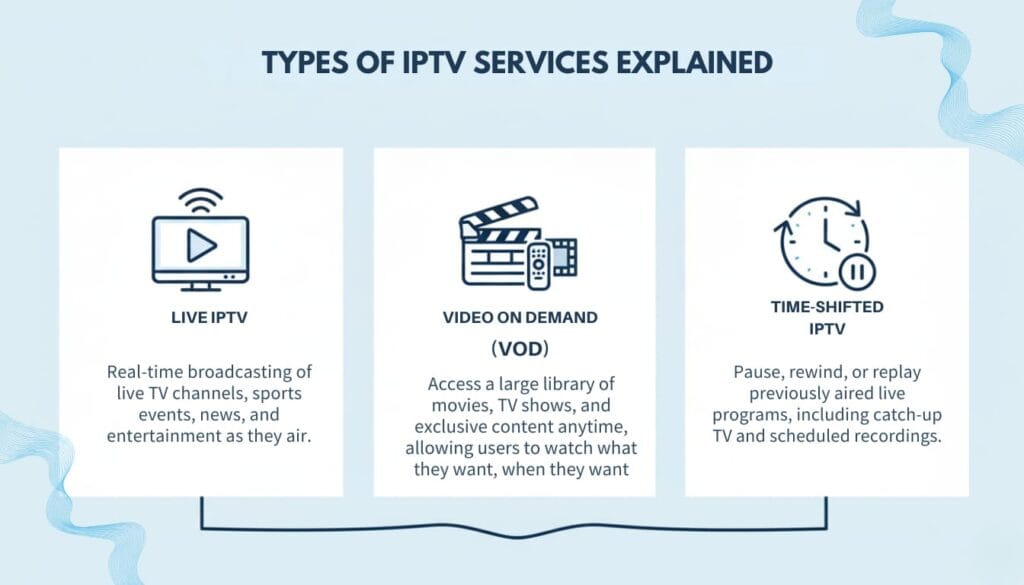
There are three main types of IPTV services:
- Live IPTV: Real-time streaming of live channels, just like cable TV.
- Video on Demand (VOD): A library of movies and shows you can watch whenever you want.
- Time-Shifted TV: Catch-up TV that lets you watch shows from the past few days.
Most internet protocol television service providers offer a mix of all three. This makes IPTV a very complete solution for the modern household.
Why People Are Switching to IPTV Service Providers
The number one reason people switch? Cost. A typical cable bill in the US averages around $100 per month. Most IPTV providers offer full packages for a fraction of that price — often between $10 and $30 per month.
But price isn’t the only reason. Here’s why so many households are making the move:
- Flexibility: Watch on multiple devices at the same time.
- More channels: Access international and niche channels you won’t find on cable.
- No contracts: Most IPTV services are month-to-month with no long-term commitment.
- Better picture quality: Many providers offer HD and 4K streaming.
- On-demand content: Huge libraries of movies and shows available anytime.
Services like Planet of IPTV have made it even easier to switch by offering user-friendly apps, stable streams, and massive channel libraries that rival traditional TV.
How to Choose the Best IPTV Provider
With dozens of options out there, picking the right provider can feel overwhelming. But if you focus on a few key factors, the choice becomes much easier. How to Choose the Best IPTV Provider, How to Choose the Best IPTV Provider
Here’s what to look for when comparing internet protocol television service providers:
1. Channel Count and Quality
Look for providers that offer the specific channels you care about. Do they have your local news? Your favorite sports leagues? International channels in your language? Always check the channel list before signing up.
2. Stream Stability and Uptime
Buffering is the enemy of a good viewing experience. Look for providers that advertise at least 99% uptime and anti-freeze technology. Reading customer reviews is one of the best ways to gauge this.
3. Device Compatibility
Make sure the service works on your devices. Most good providers support Android, iOS, Firestick, Smart TVs, and desktop browsers. Some even support Apple TV and Roku.
4. Pricing and Trial Options
Never commit to a long-term plan without testing first. Look for providers offering a free trial or a 24-hour test period. This lets you check stream quality before spending any money.
5. Customer Support
Good support matters when something goes wrong. Look for providers with live chat, quick email responses, or an active community forum.
Understanding IPTV Playlists: What They Are and How They Work
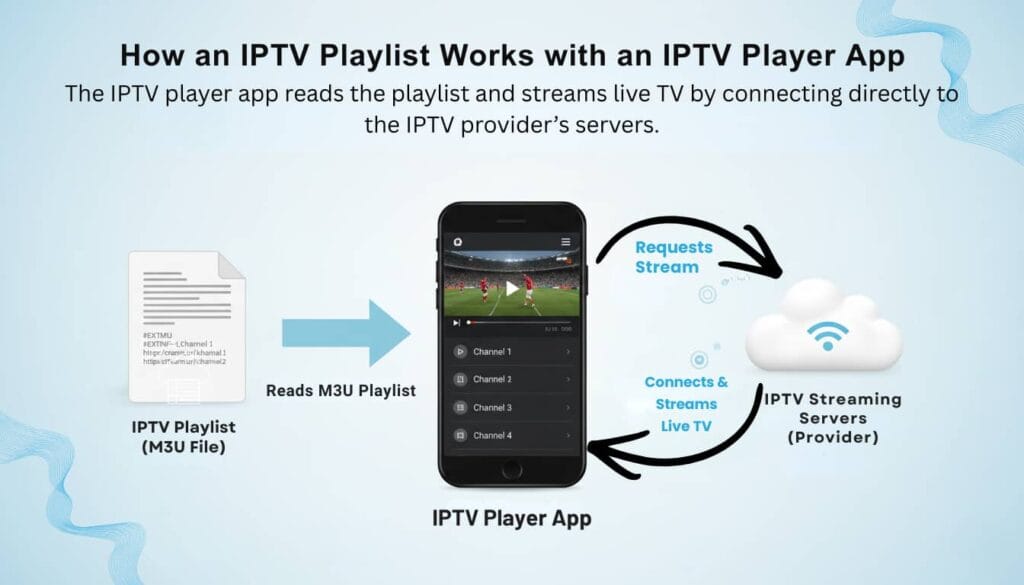
You might have heard the term IPTV playlists and wondered what it means. It’s actually pretty simple. An IPTV playlist is a file — usually in M3U format — that contains a list of channel links your IPTV app reads to display content.
Think of it like a playlist on Spotify, but instead of songs, it has TV channels. When you subscribe to an IPTV provider, they give you a playlist URL that you plug into your app.
Here’s how it typically works:
- You sign up for an IPTV service and receive a login or M3U URL.
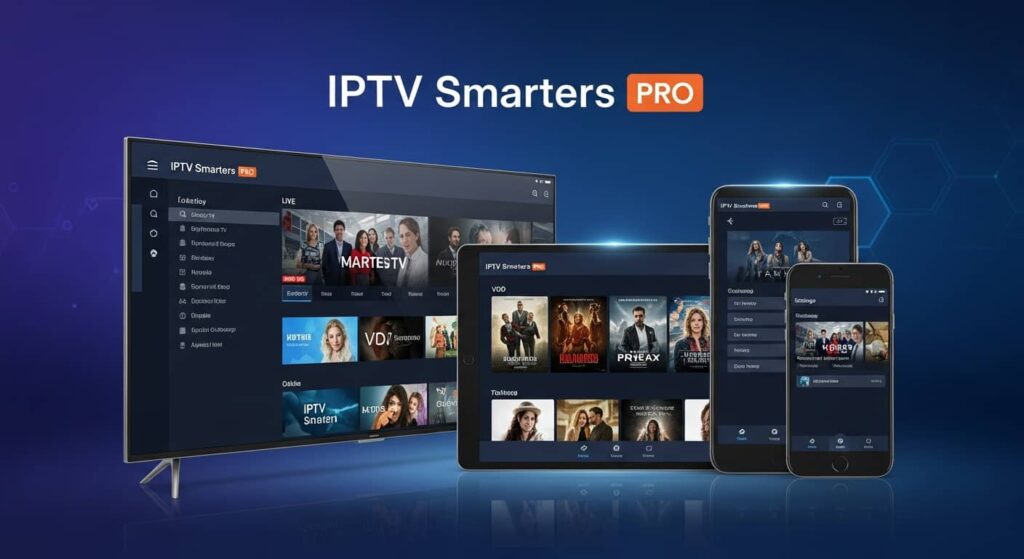
- You open an IPTV app (like TiviMate, IPTV Smarters, or Perfect Player).
- You enter your playlist URL or Xtream codes into the app.
- The app loads your channels and you start watching.
Some providers, like Planet of IPTV, make this process seamless by providing easy-to-follow setup guides for every device. Even if you’re not tech-savvy, you can usually get up and running in under 10 minutes.
Top Internet Protocol Television Providers Worth Considering
There are hundreds of IPTV providers on the market, ranging from well-established services to small operators. Here’s a breakdown of the most important qualities to look for — and some top-tier examples.
What Sets the Best Providers Apart
- 100,000+ live channels including sports, news, and entertainment
- 200,000+ VOD titles (movies and TV series)
- Support for multiple simultaneous connections
- HD, Full HD, and 4K stream quality options
- Reliable servers with 99.9% uptime guarantee
- 24/7 customer support
Planet of IPTV is one provider that consistently ranks highly across all these categories. They offer a comprehensive channel library, multiple device support, and responsive customer service — making them a great choice for first-time IPTV users and experienced streamers alike.
When comparing providers, also look at how often they update their channel lists. A good provider refreshes their content regularly to remove dead links and add new channels.
Compare IPTV Plans and Pricing — Find Your Best Fit
How to Set Up Your IPTV Service in 5 Simple Steps
Setting up IPTV is much easier than most people think. Here’s a step-by-step guide to get you watching in no time.
Step 1 — Choose Your Provider Pick an internet protocol television provider based on the factors we covered above. Sign up for a trial if available.
Step 2 — Choose Your IPTV App Download a compatible IPTV app for your device. Popular choices include TiviMate (Android/Firestick), IPTV Smarters Pro, and GSE Smart IPTV.
Step 3 — Get Your Playlist URL or Login Details After signing up, your provider will email you an M3U URL or Xtream codes (a username, password, and server URL).
Step 4 — Add Your Playlist to the App Open your IPTV app and navigate to ‘Add Playlist’ or ‘Add Source.’ Enter your URL or Xtream codes as provided.
Step 5 — Start Watching Your channels will load automatically. Browse through the channel list, set up your favorites, and enjoy!
Common Mistakes to Avoid When Choosing an IPTV Provider
Not all IPTV providers are created equal. There are some red flags to watch out for before you hand over your money.
No free trial or money-back guarantee Legitimate providers are confident in their service. If a provider won’t let you test before committing, that’s a red flag.
Unrealistically cheap pricing If a service is offering 50,000 channels for $3 a month, be skeptical. Quality servers and content cost money. Very cheap services often have poor reliability.
No customer support If you can’t find a way to contact the provider — no chat, no email, no forum — move on. You’ll need support at some point.
Anonymous operators Look for providers with some online presence — a website, reviews, social media. Complete anonymity is a red flag.
Outdated channel lists Check reviews to see if users complain about dead channels. A good provider updates their playlist regularly.

Is IPTV legal?
IPTV technology itself is completely legal. The legality depends on the provider. Licensed providers that have agreements with content owners are legal to use. Unlicensed services that stream copyrighted content without permission operate in a legal gray area. Always choose a reputable provider and check the laws in your country.
How much internet speed do I need for IPTV?
For standard HD streaming, you’ll need at least 10 Mbps. For Full HD, aim for 20-25 Mbps. If you want 4K streaming or plan to watch on multiple devices at once, 50 Mbps or more is recommended. A wired ethernet connection will always give you more stable streams than Wi-Fi.
What is an IPTV playlist and how do I use it?
An IPTV playlist (usually an M3U file) is a list of channel links provided by your IPTV service. You paste the URL into an IPTV app, and it automatically loads all the channels. Most providers give you this link immediately after signing up. Apps like TiviMate and IPTV Smarters make the process very straightforward.
Can I use IPTV on my smart TV or Firestick?
Yes! Most internet protocol television service providers support Smart TVs, Amazon Firestick, Android TV, iOS, and Android smartphones. Some also support Apple TV, Roku, and desktop computers. Always check device compatibility before subscribing, and look for providers with dedicated apps for a smoother experience.
Why does my IPTV keep buffering?
Buffering is usually caused by one of three things: slow internet speed, an overloaded IPTV server, or a poor Wi-Fi connection. First, test your internet speed to ensure it meets the minimum requirements. If your speed is fine, the problem may be with your provider’s servers. Switching to a wired ethernet connection can also make a big difference. Some providers, like Planet of IPTV, use multiple server locations to reduce buffering even during peak hours.
Conclusion
Choosing the right internet protocol television provider doesn’t have to be complicated. Focus on channel selection, stream reliability, device support, and pricing. Always take advantage of free trials before committing.
Whether you’re a sports fanatic, a movie lover, or just tired of overpaying for cable, IPTV offers a smarter way to watch TV. With the right provider and a good internet connection, you’ll wonder why you didn’t switch sooner.