You’ve probably heard conflicting stories about IPTV in Australia. Your mate swears by his cheap streaming service, but you’re worried about ending up on the wrong side of the law. Maybe you’ve seen scary headlines about IPTV raids or court cases, and now you’re wondering: is IPTV illegal in Australia?
Here’s the truth that might surprise you: IPTV technology itself is completely legal in Australia. Yes, you read that right. The confusion comes from the fact that while the technology is legal, how it’s used makes all the difference.
The Australian legal landscape around IPTV isn’t as black and white as many people think. There are legitimate, fully legal IPTV services operating right now in Australia, and there are also illegal services that could land providers (and potentially users) in hot water. Understanding the difference could save you from legal headaches and financial loss.
In this comprehensive guide, we’ll cut through the confusion and give you clear, practical answers about IPTV legality in Australia. You’ll learn exactly what’s legal, what’s not, how to spot the difference, and how to enjoy IPTV services without any legal concerns. Let’s get straight into it.
Table of Contents
ToggleUnderstanding IPTV Technology and Australian Law
Before we answer “is IPTV illegal in Australia,” we need to understand what IPTV actually is and how Australian law views it.
IPTV stands for Internet Protocol Television. It’s simply a method of delivering television content through internet connections instead of traditional cable, satellite, or antenna broadcasts. Think of it like the difference between sending a letter (traditional TV) versus sending an email (IPTV)—both deliver the message, just through different channels.
The technology itself is neutral. Australian law doesn’t ban IPTV as a broadcasting method. In fact, many completely legal services use IPTV technology, including some major telecommunications companies offering streaming packages to their customers.
The Australian Communications and Media Authority (ACMA) recognizes IPTV as a legitimate content delivery method. Major Australian broadcasters are increasingly using IPTV protocols for their catch-up and streaming services. This means the technology has official recognition and acceptance.
The Legal Framework
Australian copyright law, specifically the Copyright Act 1968, governs how content can be distributed and consumed. The law protects content creators’ rights to control how their work is distributed and reproduced.
When IPTV services have proper licensing agreements with content owners—paying for the right to stream movies, TV shows, sports, and other content—they operate completely within the law. These are legitimate businesses providing a legal service.
The problems arise when IPTV services stream copyrighted content without permission or licensing. This violates copyright law, making the service illegal regardless of the technology used to deliver it.
Why the Confusion Exists
The confusion about IPTV legality comes from media coverage that often lumps all IPTV services together. When news reports cover raids on illegal IPTV operations, headlines sometimes suggest “IPTV” itself is the problem, rather than the unlicensed content distribution.
Additionally, the market has been flooded with both legal and illegal services, making it genuinely difficult for average consumers to tell them apart. Some illegal services operate quite openly, creating the false impression that they must be legitimate.
Is IPTV Legal in Australia? Breaking Down the Facts
Let’s answer the core question directly: is IPTV legal in Australia? The answer is yes—with crucial qualifications.
Legal IPTV Services
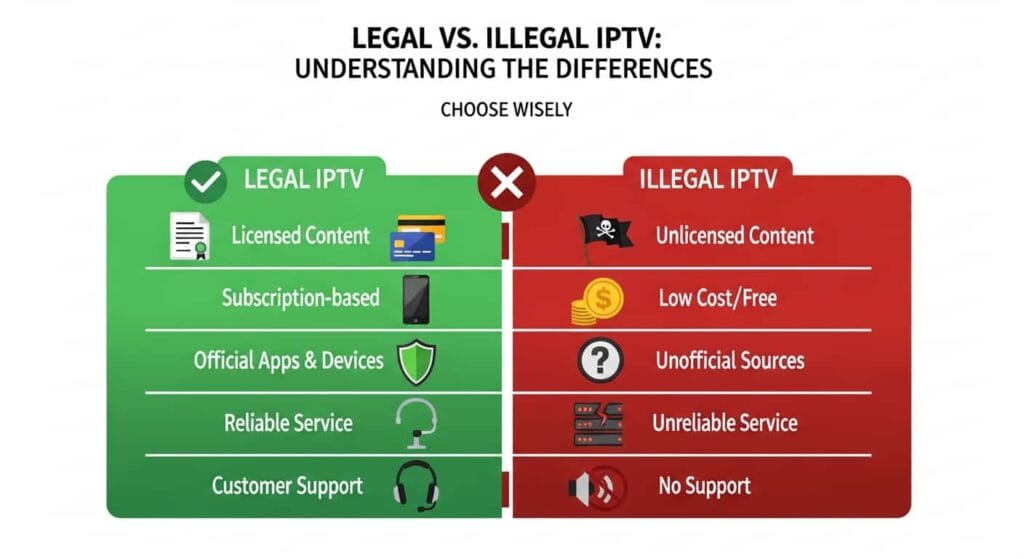
Legal IPTV services in Australia share these characteristics:
- They hold proper licensing agreements with content creators and distributors
- They operate as registered businesses with transparent operations
- They charge prices that reflect the actual cost of licensed content
- They provide legitimate customer support and billing
- They comply with Australian consumer protection laws
Services like Planet of IPTV that maintain proper licensing and operate transparently fall into this legal category. These providers pay content owners for distribution rights, just like traditional cable or satellite companies do.
Legal services might include Australian free-to-air channels, licensed international content, sports packages with official broadcasting rights, and on-demand libraries where proper licensing fees have been paid.
Illegal IPTV Services
Illegal IPTV services violate copyright law by streaming content without authorization. These typically:
- Offer premium content at suspiciously low prices (like $5-10 for hundreds of channels)
- Don’t provide clear business registration or contact information
- Use vague terms about “content sources” or “grey market” streams
- Operate through anonymous payment methods
- Frequently change names or domains
- Often originate from overseas with no Australian presence
The “too good to be true” pricing is usually the biggest giveaway. If someone offers you every premium sports channel, movie service, and TV network for $10/month, they’re almost certainly distributing pirated content.
The Grey Area
Some services operate in what might seem like a grey area, but legally they’re quite clear—they’re illegal. Just because a service hasn’t been shut down yet doesn’t mean it’s legal. Enforcement takes time and resources, so many illegal services operate for months or years before facing consequences.
What Australian Law Says About IPTV Users
While much discussion focuses on IPTV providers, what about users? If you subscribe to an illegal IPTV service, what are your legal risks?
Current Legal Position for Users
Australian law primarily targets the suppliers of illegal content rather than individual consumers. The Copyright Act 1968 and its amendments focus enforcement efforts on those distributing pirated content, not those consuming it.
To date, there have been no prosecutions of individual Australians simply for subscribing to illegal IPTV services. Law enforcement and copyright holders focus their resources on shutting down the source of piracy rather than chasing individual users.
However—and this is important—just because users haven’t been prosecuted doesn’t mean it’s legal to use pirated IPTV services. Using services you know (or should reasonably know) are distributing unlicensed content could theoretically expose you to legal liability.
Potential Risks for Users
While prosecution is unlikely, users of illegal IPTV services face several risks:
Financial loss is the most immediate risk. Illegal services often disappear overnight, taking your subscription money with them. You have no legal recourse to recover these payments.
Data security concerns are serious. Illegal IPTV operators don’t follow standard security practices. Your payment information and personal data may be at risk when dealing with these services.
Service disruption happens frequently. When authorities shut down illegal IPTV operations or block their servers, you lose access immediately with no refund or alternative.
Internet provider actions are becoming more common. Some Australian ISPs now block access to known illegal streaming sites following court orders from copyright holders.
What Courts Have Said
Australian courts have issued numerous website-blocking orders under Section 115A of the Copyright Act. These orders require ISPs to block access to websites facilitating copyright infringement, including some illegal IPTV services.
While these orders target the services themselves, they demonstrate that Australian legal authorities take illegal IPTV seriously. The trend is toward more aggressive enforcement, not less.
Stay on the right side of the law. Choose legal, licensed IPTV with Planet of IPTV

How to Identify Legal vs Illegal IPTV Services
Knowing how to distinguish legal from illegal IPTV services protects you from legal risks and financial loss. Here’s your practical checklist.
Signs of a Legitimate Service
Transparent business information is the first green flag. Legal providers display:
- Australian Business Number (ABN) or registration details
- Physical business address
- Clear contact information (phone, email, support chat)
- Detailed terms of service and privacy policy
Realistic pricing reflects actual licensing costs. Legal 4k live iptv services (Read more…) with comprehensive content cost real money because content licenses are expensive. Expect to pay $20-50 monthly for quality legal services.
Professional presentation matters. Legal services invest in professional websites, apps, and customer interfaces. They look and feel like legitimate businesses because they are.
Clear licensing information shows the service is above board. While they might not list every licensing agreement, reputable providers can explain where their content comes from and confirm they have proper rights.
Customer support that’s responsive and helpful indicates a legitimate operation. Legal services want happy, long-term customers and invest in support infrastructure.
Red Flags for Illegal Services
Suspiciously cheap pricing is the biggest warning sign. If you’re getting “every channel in the world” for $10/month, that’s pirated content. The math simply doesn’t work otherwise.
Vague or missing business information suggests the operators don’t want to be identified. No business address, hidden domain registration, and anonymous payment methods all scream illegal operation.
Claims like “grey market,” “international streams,” or “overseas servers” are often code for “we don’t have proper licenses.” Legal services don’t need euphemisms—they’re proud of their licensing.
Anonymous payment requirements like cryptocurrency only or prepaid cards indicate the service wants to avoid financial scrutiny. Legal businesses accept normal payment methods.
Frequent domain changes or service interruptions happen when illegal services get shut down and quickly relaunch under new names.
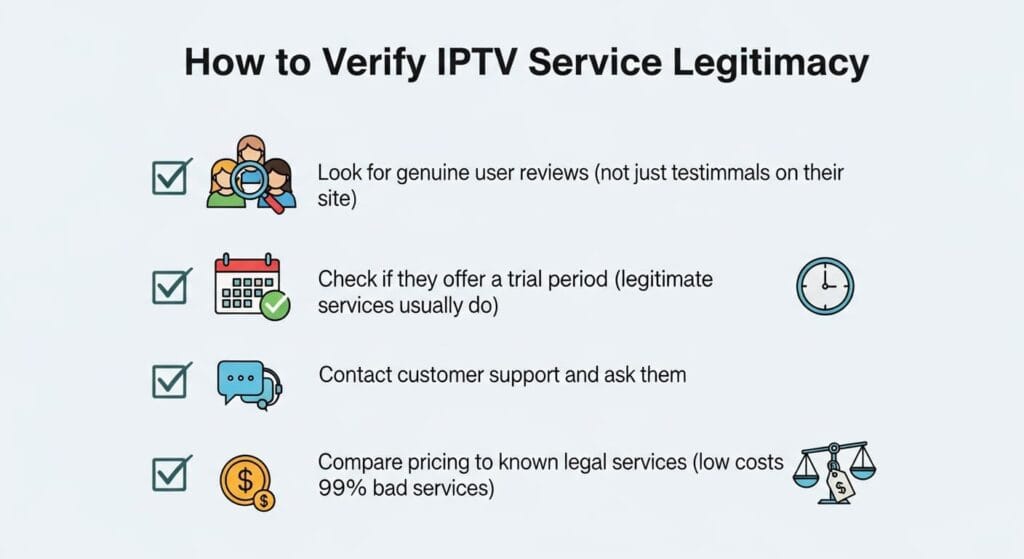
Testing Legitimacy
Before subscribing to any IPTV service, do these checks:
- Search for the company’s ABN on the Australian Business Register
- Look for genuine user reviews on independent platforms (not just testimonials on their site)
- Check if they offer a trial period (legitimate services usually do)
- Contact customer support and ask about their licensing
- Compare pricing to known legal services
Services like Planet of IPTV welcome these questions because they have nothing to hide. Illegal services will dodge or give vague answers.
Legal Consequences and Enforcement Actions
Understanding what actually happens when illegal IPTV operations get caught helps you appreciate why choosing legal services matters.
Recent Australian Enforcement Actions
Australian authorities have taken significant action against illegal IPTV in recent years. The Australian Federal Police, working with copyright holders and ACMA, have conducted multiple operations shutting down major illegal IPTV networks.
In 2019, Operation Skyscraper targeted illegal streaming operations, resulting in arrests and service shutdowns. This wasn’t a one-off—it signaled ongoing commitment to enforcement.
Court-ordered website blocks have become increasingly common. Since 2016, Australian courts have issued over 100 site-blocking orders affecting illegal streaming services, including IPTV platforms.
Domain seizures happen regularly. When illegal IPTV services are identified, authorities can seize their web domains, immediately cutting off user access.
Penalties for Providers
Individuals operating illegal IPTV services face serious consequences:
- Criminal charges can result in prison sentences up to 5 years for serious copyright infringement
- Financial penalties can reach hundreds of thousands of dollars
- Civil lawsuits from copyright holders can result in massive damages awards
- Asset seizure allows authorities to confiscate equipment and profits from illegal operations
A 2021 case saw an illegal IPTV operator in Victoria fined over $400,000 and given a suspended prison sentence. These aren’t hypothetical risks—they’re real consequences people have faced.
Impact on Users
While users face minimal prosecution risk, they’re not immune to consequences:
Service loss is immediate when operations get shut down. Your subscription money disappears with the service.
ISP blocking means even if an illegal service relocates, Australian users might not be able to access it if their internet provider has blocked the domains.
Future legal changes could increase user liability. While current enforcement focuses on providers, laws can change to make user liability more explicit.
The Trend Toward Stronger Enforcement
International cooperation is increasing. Australian authorities work with overseas law enforcement to target illegal IPTV networks that operate across borders.
Technology is improving. Automated systems now help copyright holders identify illegal streams faster, leading to quicker shutdowns.
Industry pressure from legitimate content creators and distributors is pushing for stronger enforcement and new legal tools to combat piracy.
Legal Alternatives: Enjoying IPTV Without Risk
You don’t have to choose between great content and legal compliance. Plenty of legal options deliver excellent viewing experiences.
Legitimate IPTV Services in Australia
Several types of legal IPTV services operate in Australia:
Licensed commercial providers offer comprehensive IPTV packages with proper content rights. These services provide Australian channels, sports, movies, and international content legally.
Telecommunications companies like Telstra, Optus, and others offer IPTV packages as part of their service bundles. These are completely legal and often include sports and entertainment packages.
Specialty streaming services focus on specific content types. Sports streaming services with official broadcasting rights, for example, provide legal access to live sports through IPTV technology.
Free-to-air catch-up services from networks like 7plus, 9Now, and 10 play use IPTV protocols and are entirely legal. They’re funded by advertising rather than subscriptions.
Building a Legal Streaming Setup
You can create a comprehensive entertainment system using only legal services:
Start with a base of free-to-air catch-up apps for Australian content. These give you local news, popular shows, and entertainment at no cost.
Add one or two streaming subscriptions like Netflix, Disney+, or Stan for movies and series. These services use IPTV technology and are completely legal.
Include a sports package if you’re a fan. Kayo Sports, for example, provides legal access to numerous sports through streaming, including AFL, NRL, cricket, and international leagues.
Consider a licensed comprehensive IPTV service like Planet of IPTV that combines live channels, sports, and on-demand content in one package with proper licensing.
Cost Comparison
Legal options cost more than illegal services, but consider what you’re getting:
Peace of mind knowing you’re not breaking laws or supporting criminal operations is worth something.
Reliable service without sudden shutdowns or quality issues saves you the frustration of constantly searching for new providers.
Actual customer support means when you have problems, someone helps you fix them instead of ignoring you.
Quality assurance ensures you get proper HD or 4k live iptv services(read more…) without buffering or low-quality pirated streams.
The total cost for a legal setup—combining free services with a few paid subscriptions—typically runs $30-60 monthly. That’s reasonable for legitimate, reliable entertainment.
Ready for legal, premium IPTV? Start your trial with Planet of IPTV today and enjoy
Future of IPTV Regulation in Australia
The legal landscape around IPTV continues evolving. Understanding where things are heading helps you make informed decisions.
Proposed and Potential Changes
Australian lawmakers are considering stronger anti-piracy measures. Recent discussions have focused on making it easier to block illegal streaming sites quickly without lengthy court processes.
User liability provisions might increase. While current law focuses on providers, future amendments could make it explicitly illegal to knowingly access pirated content, similar to laws in some European countries.
Industry self-regulation is expanding. IPTV providers’ associations are developing standards and codes of conduct to help consumers identify legitimate services.
Technology-based solutions are emerging. New systems can automatically identify and block illegal streams in real-time, making it harder for pirated services to operate.
International Trends Affecting Australia
Global anti-piracy cooperation is strengthening. Australia participates in international efforts to combat cross-border copyright infringement, including illegal IPTV operations.
European enforcement models are being studied. Some European countries have implemented strict user-facing penalties for accessing pirated content, and Australian policymakers are monitoring these approaches.
Industry pressure from Hollywood studios, sports leagues, and content creators is pushing for tougher laws worldwide, including in Australia.
What This Means for Consumers
The trend is clearly toward stricter enforcement and clearer regulations. Here’s what to expect:
Greater clarity about what’s legal and what’s not should emerge as regulations become more specific to streaming technologies.
Easier identification of legal services will come through certification programs or official marks that legitimate providers can display.
Potentially higher risks for using illegal services if laws change to explicitly target users rather than just providers.
Better legal options as legitimate providers improve their offerings to compete effectively with pirated services.
The smart move is choosing legal services now rather than waiting for regulations to tighten further.

Making the Right Choice: Legal IPTV in Practice
Now that you understand the legal landscape, let’s talk about actually choosing and using legal IPTV services in Australia.
Evaluating Legal IPTV Providers
When shopping for legal IPTV, ask these questions:
Can the provider clearly explain their licensing arrangements? Legitimate services are transparent about where content comes from and how they’ve licensed it.
What’s included in the channel lineup? Make sure the service offers the specific content you want—Australian channels, sports, international content, movies, etc.
What quality levels do they offer? Legal 4k live iptv services should provide multiple quality options including HD and Ultra HD where available.
How many devices can you use simultaneously? Most legal services allow 2-5 concurrent streams for families sharing one account.
What’s the customer support like? Test it before subscribing. Send a question and see how quickly and helpfully they respond.
Trial Periods and Guarantees
Reputable legal services offer trial periods because they’re confident in their product:
Free trials typically last 24-48 hours, giving you time to test stream quality and channel availability without financial commitment.
Money-back guarantees show the provider stands behind their service. Look for 7-14 day satisfaction guarantees.
No-commitment monthly plans let you try the service without locking into long-term contracts. Once you’re satisfied, you can consider longer terms for cost savings.
Setting Expectations
Legal IPTV services won’t be quite as cheap as illegal ones, but they offer value through:
Reliability—streams don’t disappear randomly, and services don’t shut down overnight.
Quality—proper licensing allows providers to deliver high-quality streams optimized for Australian internet connections.
Security—your personal and payment information stays safe with established, accountable businesses.
Support—actual help when you need it rather than being ignored or scammed.
Updates—regular improvements to apps, features, and content libraries.
Your Action Plan
Here’s how to transition to or start with legal IPTV:
- List your must-have content (sports, movies, specific channels, etc.)
- Research legal providers offering that content
- Verify their legitimacy using the checklist from earlier sections
- Take advantage of trial periods to test 2-3 services
- Choose the best fit for your needs and budget
- Enjoy your content legally and worry-free
Legal IPTV isn’t just about avoiding legal problems—it’s about getting better service, supporting content creators, and making smart consumer choices.

Can you go to jail for using IPTV in Australia?
Using legal IPTV services in Australia carries no legal risk whatsoever. For illegal IPTV services, current Australian law targets providers rather than individual users, and there have been no prosecutions of consumers simply for subscribing to illegal IPTV. However, this doesn’t make using pirated services legal—it just means enforcement focuses elsewhere. Providers of illegal IPTV can face serious criminal charges including jail time up to 5 years, but users’ main risks are financial loss, service disruption, and potential data security issues rather than criminal prosecution.
How can I tell if my IPTV service is legal in Australia?
Legal IPTV services in Australia display clear business information including ABN registration, provide transparent contact details, charge realistic prices ($20-50+ monthly), offer professional customer support, and can explain their content licensing. Red flags for illegal services include suspiciously cheap pricing (like $10 for hundreds of premium channels), vague business information, anonymous payment requirements, frequent service interruptions, and dodgy claims about “grey market” content. Before subscribing, verify the provider’s Australian business registration, check independent reviews, and ask directly about their licensing agreements—legitimate providers welcome these questions.
Are free IPTV services illegal in Australia?
Not all free IPTV services are illegal. Legitimate free services include Australian broadcasters’ catch-up apps (7plus, 9Now, 10 play, ABC iview, SBS On Demand) which use IPTV technology legally. These are funded through advertising rather than subscriptions. However, many “free IPTV” services offering premium channels, sports, and movies at no cost are distributing pirated content illegally. The rule of thumb: if it seems too good to be true—like free access to content that normally requires expensive subscriptions—it’s almost certainly illegal. Stick with recognized free-to-air services or pay for legitimate subscriptions.
What happens if Australian authorities block my IPTV service?
If you’re using an illegal IPTV service that gets blocked by Australian authorities, you’ll lose access immediately with no refund. Australian courts regularly issue site-blocking orders requiring ISPs to prevent access to illegal streaming services. When this happens, the website and streams become inaccessible to Australian internet users. Your subscription money is lost, as illegal operators don’t provide refunds and you have no legal recourse. This is one key reason to choose legal services—they won’t suddenly disappear. Legal providers like Planet of IPTV operate openly and won’t face blocking orders because they comply with copyright law.
Is using a VPN with IPTV illegal in Australia?
Using a VPN (Virtual Private Network) is not illegal in Australia, and VPNs have many legitimate uses including privacy and security. However, using a VPN to access illegal IPTV services doesn’t make that activity legal—it just potentially masks it. If you’re using a legal, licensed IPTV service, you don’t need a VPN for legal protection (though you might use one for general privacy). If you’re using a VPN specifically to hide illegal IPTV use, you’re still engaging in potentially illegal activity. The smart approach is choosing legal IPTV services where VPNs are optional for privacy rather than necessary for hiding questionable activities.

So, is IPTV illegal in Australia? The technology isn’t—but how it’s used determines legality. Legal IPTV services with proper licensing operate completely within Australian law, while services distributing unlicensed content violate copyright regulations.
Your safest path is choosing legitimate providers that maintain proper licensing, offer transparent operations, and provide reliable service. The small price difference between legal and illegal services is worth it for peace of mind, better quality, and actual customer support. Make the smart choice and enjoy your entertainment legally and worry-free.